

Hamza Lab @ the University of Maryland
Decoding the mystery of heme trafficking.
A multi-organismal approach to define how cells and organs move heme and iron, with implications for anemia, metabolic disease, and infection
How do cells and organs coordinate heme availability to sustain life?
Heme is essential for virtually all life, yet how cells acquire, transport, and detoxify this iron-containing molecule, and how tissues distribute it, remain poorly understood.
We use C. elegans, yeast, zebrafish, mice, human cells, and parasites to dissect these conserved pathways. Our work reveals heme as more than a cofactor: a signaling molecule that cells must traffic with precision, harnessing its chemistry while guarding against its toxicity.
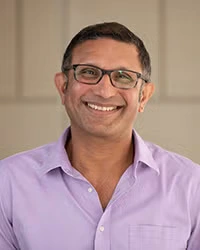
Iqbal Hamza, Ph.D. Professor
Dept. of Pediatrics, Center for Blood Oxygen Transport and Hemostasis (CBOTH)
Dept. of Animal & Avian Sciences (Joint appointment with UMD)
Biological Sciences Graduate Program (Member)
University of Maryland School of Medicine
670 West Baltimore St
8175 HSFIII, CBOTH
Baltimore, MD 21201
Email: ihamza@som.umaryland.edu
Phone: 410-706-4533
University of Maryland
8127 Regents Drive
2125 Animal Sciences Center
College Park, MD 20742
Email: hamza@umd.edu
Phone: 310-405-0649
Heme moves. We follow it.
Heme Transport & Trafficking
We pioneered heme research in C. elegans, the only animal model unable to synthesize heme de novo. This unusual biology let us identify HRG1/SLC48A1, the first bona fide eukaryotic heme transporter, and define a family of trafficking proteins conserved from worms to humans.
Vertebrate Hematopoiesis
Hemoglobinopathies such as beta-thalassemia affect 7% of the global population. Using CRISPR-engineered mice and zebrafish, we are revealing how heme transport drive red blood cell maturation and whether targeting this pathway can alleviate genetic blood disorders.
Organismal Homeostasis
Cells are not self-sufficient islands. We map the inter-organ signaling networks, including a gut-brain axis mediated by HRG-7, that coordinate heme balance across tissues and drive systemic disease.
Host-Pathogen Interactions
Pathogens compete with hosts for heme. We discovered LHR1, the first parasite heme transporter, which Leishmania uses to hijack heme from macrophages, and we are developing small molecules that selectively block LHR1 to starve the parasite without harming the host.
Essential. Toxic. In transit.
Selected Works
2026
A cell-nonautonomous heme acquisition pathway enables erythroid hemoglobinization under stress.
2017
Inter-organ signalling by HRG-7 promotes systemic haem homeostasis
2014
Control of metazoan heme homeostasis by a conserved multidrug resistance protein.
2011
An intercellular heme trafficking protein delivers maternal heme to the embryo during development in C. elegans.
2008
Heme homeostasis is regulated by the conserved and concerted functions of HRG-1 proteins.
The people who follow the heme
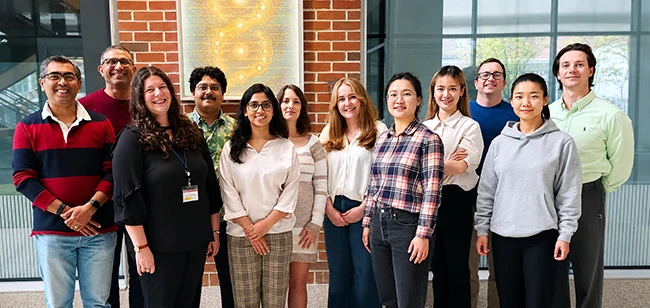
You will lead high-impact projects that bridge basic discovery and human disease.
You will combine biochemical, cell biological, and molecular genetic approaches with collaborators across the globe, following heme wherever the biology leads.
Contact Us
- ihamza@som.umaryland.edu
-
670 West Baltimore St, 8175 HSFIII
CBOTH, Baltimore, MD 21201
- Postdoctoral Fellows
We seek postdocs to lead and collaborate on projects on how cells sense, traffic, and respond to heme. You will work across multiple model systems, integrate cell biology, genetics, CRISPR/RNAi screens, and genomics.
- Graduate Students
The lab accepts graduate students through GPILS at the University of Maryland School of Medicine, and through ANSC, MOCB, and CBBG at the University of Maryland College Park. Prospective students interested in joining the lab directly are encouraged to get in touch before applying.
- Undergraduates
The lab is located at the School of Medicine in Baltimore. Volunteer and paid work-study positions are available periodically. Independent study and senior thesis projects are open to students who can commit at least 15 hours per week for two academic years.